
Church Roof Repairs and Restoration
Traditional Church Roofing Materials
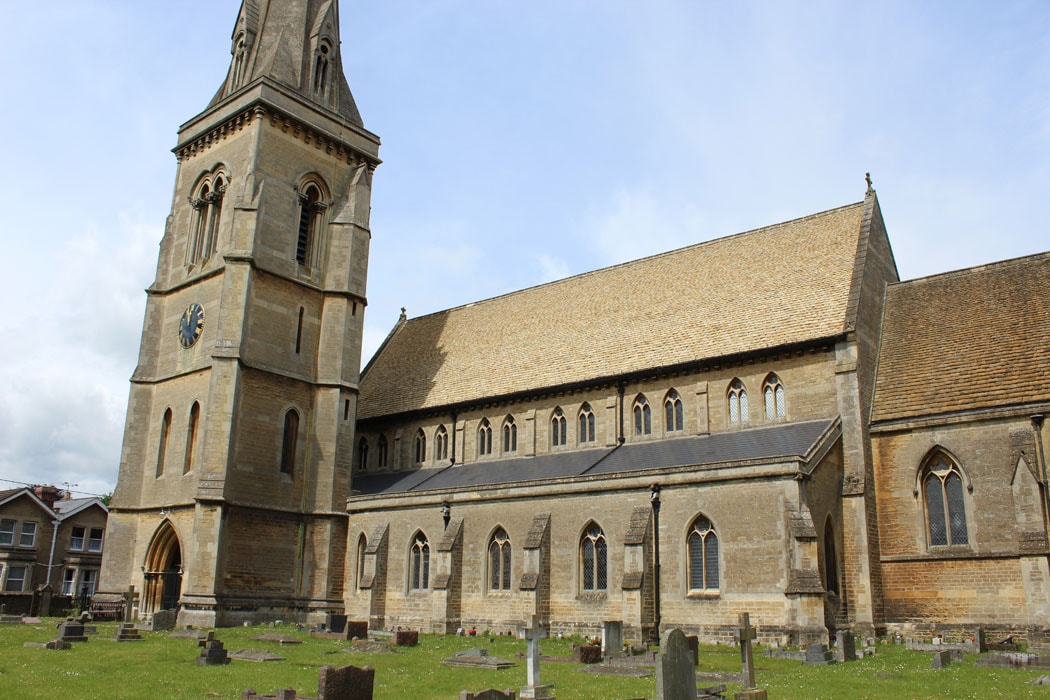
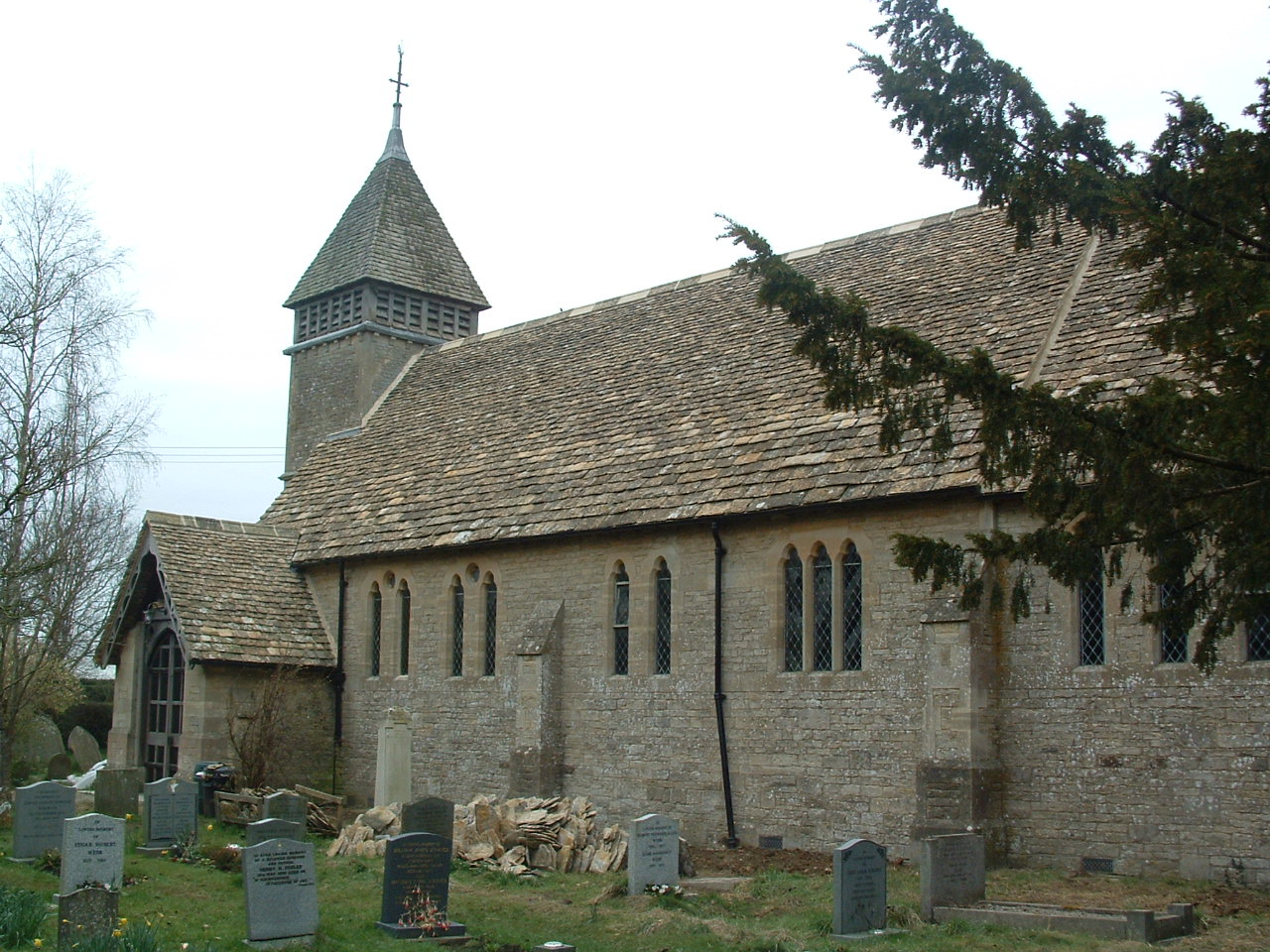
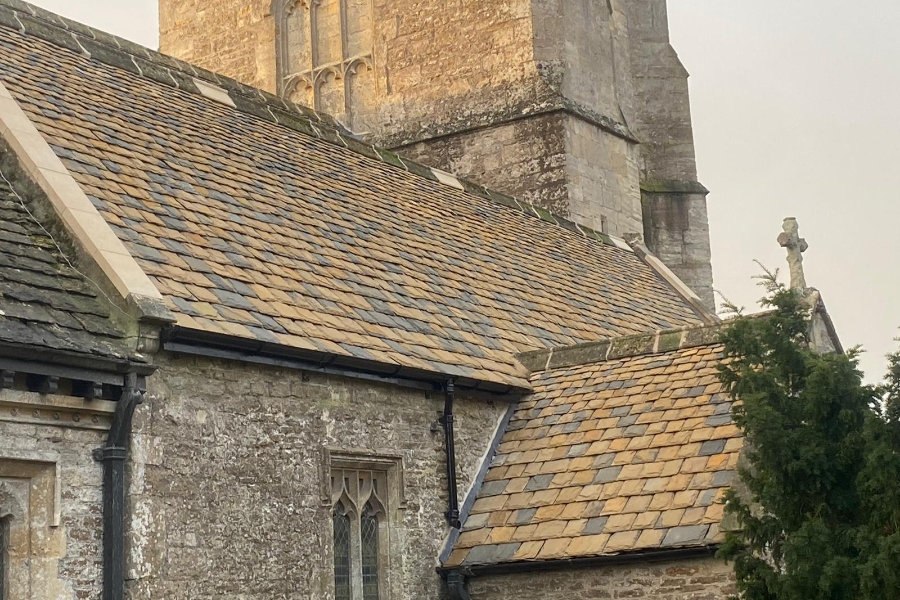
Materials used across our church roof repair and restoration projects include natural stone slate, handmade clay tiles, Cotswold stone slate, sand-cast lead, recast lead box gutters and oak shakes.
Our work has also extended beyond the roof covering itself to associated elements including masonry repairs, clock face restoration, stained glass window restoration and gilded weathervanes.
Understanding these different materials and features is particularly important when working on historic churches, where roof repairs need to respect the character and existing fabric of the building.
Church Roof Restoration and Reroofing
Not every church roof requires complete replacement. Existing materials can often be reused as part of a carefully planned church roof restoration, with damaged or unsuitable materials replaced where necessary.
Larger projects may involve a complete or phased reroof. One of our longest-running projects has been the three-phase reroof of St Mary’s Church, and we have worked on all three churches that form the Parish of Three Saints in Somerset.
Need advice on your church roof?
Whether you’re dealing with a leak or planning a restoration, speak to our team about the right approach for your church.
Or call 01373 462 224

Experience Across Historic and Listed Churches
Our ecclesiastical roofing work includes churches of different ages, architectural styles and listed status.
Projects have included the Grade I listed St Sampson’s Church in Wiltshire, Grade II* All Saints Church in Berkshire and Quarr Abbey on the Isle of Wight. We have also worked on all three churches that make up The Parish of the Three Saints in Somerset.
Church roofing projects frequently involve working closely with architects. At St Nicolas Church in Newbury, for example, we partnered with Andrew Townsend Architects, an architectural practice we have worked with for more than two decades.
Why Choose West Country Tiling?
Church roofing has been a significant part of our work for more than three decades. Our team understands traditional roofing materials and methods and has practical experience working on Grade I and Grade II* listed churches, historic places of worship and complex restoration projects.
Rather than applying the same approach to every roof, we consider the existing materials, condition of the roof and requirements of the individual building, retaining suitable original materials wherever possible.
Get in Touch
If you are planning church roof repairs, restoration or a complete reroof, talk to West Country Tiling about the requirements of your project.
We can discuss the existing roof, traditional materials involved and the work that may be required before deciding on the appropriate next steps.
You can call us on 01373 462 224 or email info@westcountrytiling.com to arrange your free roof survey.
Church Roofing FAQs
What Can Church Roof Repairs Involve?
Church roof repairs can range from replacing individual materials to more extensive structural and restoration work, depending on the condition and construction of the roof. At St James Church in Milton Clevedon, our work included recasting lead gutters, replacing roof boarding, masonry consolidation and replacing stone slate where the original material could no longer be salvaged.
At St Peter’s Church in Hornblotton, the nave roof suffered from nail sickness, where the original iron fixings had deteriorated. Uneven or irregular courses of tiles can be an indication of this problem and should be investigated before further deterioration occurs.
What should you look for when choosing church roofing specialists?
Church roofing specialists should understand traditional materials, historic construction and the practical challenges involved in repairing and restoring older roofs. West Country Tiling’s work at Grade I listed St Sampson’s Church in Cricklade included stripping the existing lead, recasting it in our own sand-cast facility and reusing it to cover the nave roof. The project also required complex lead bossing and specialist detailing to the pitched lead roof and gutters.
What is involved in church roof restoration?
Church roof restoration aims to repair and preserve the existing building while replacing materials where their condition makes this necessary. At St John the Baptist Church in Foxham, a Grade II* listed church, a long-term restoration and reroofing project included salvaging Cotswold stone slates and relaying them on riven oak laths. The tower’s old oak shakes were also removed and replaced with new hand-cleaved oak shakes.
Restoration can also extend beyond the roof covering. At Foxham, the team repaired the tower louvres, the angled slats that allow ventilation while helping to keep out rain, and decorated the weathervane, including gilding its cockerel.
What materials are used in ecclesiastical roofing?
Ecclesiastical roofing can involve a wide range of traditional materials, depending on the age, design and location of the church. West Country Tiling’s church projects have included Cotswold stone slate, natural slate, handmade clay tiles, oak shakes and sand-cast lead.
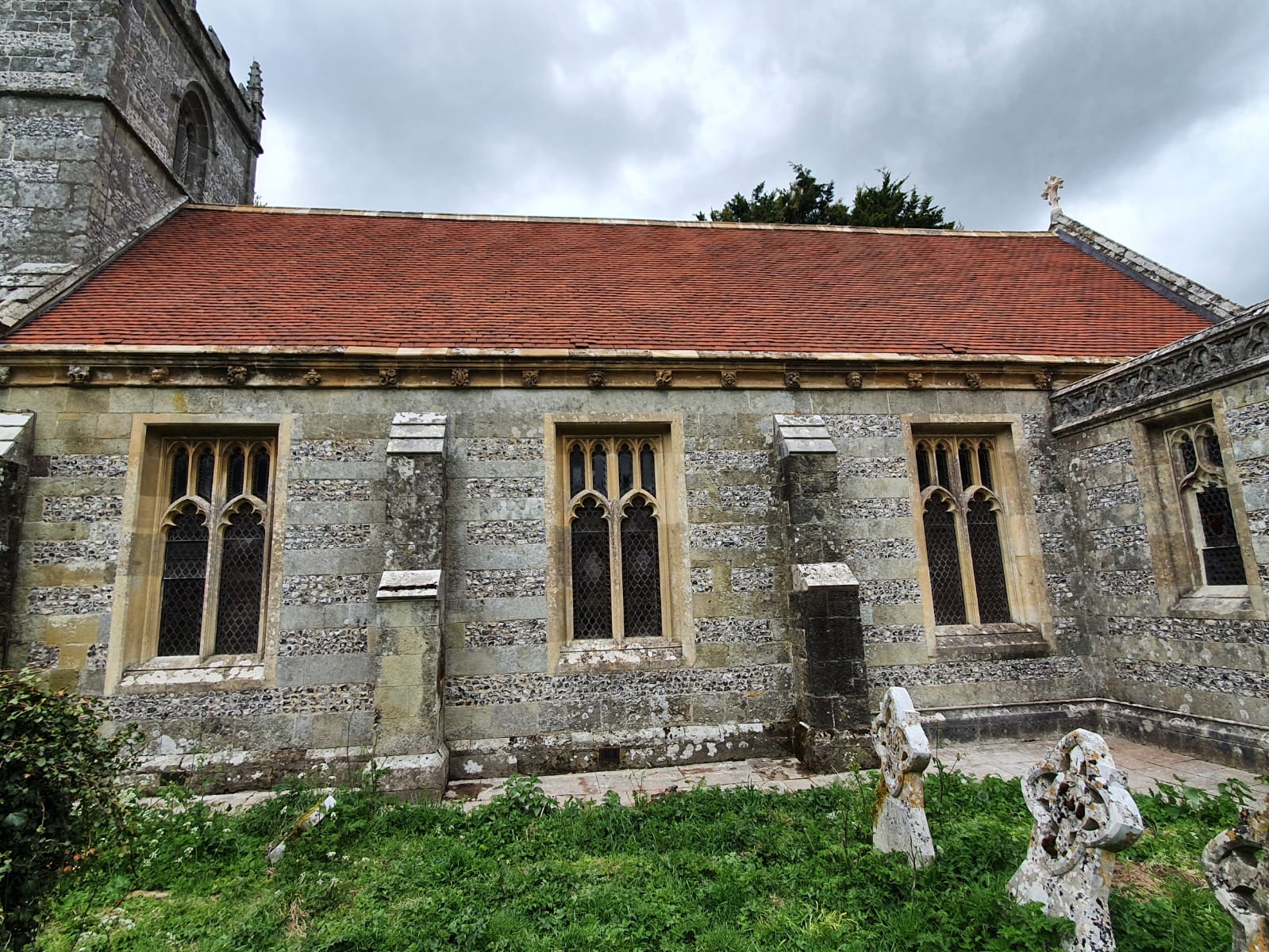
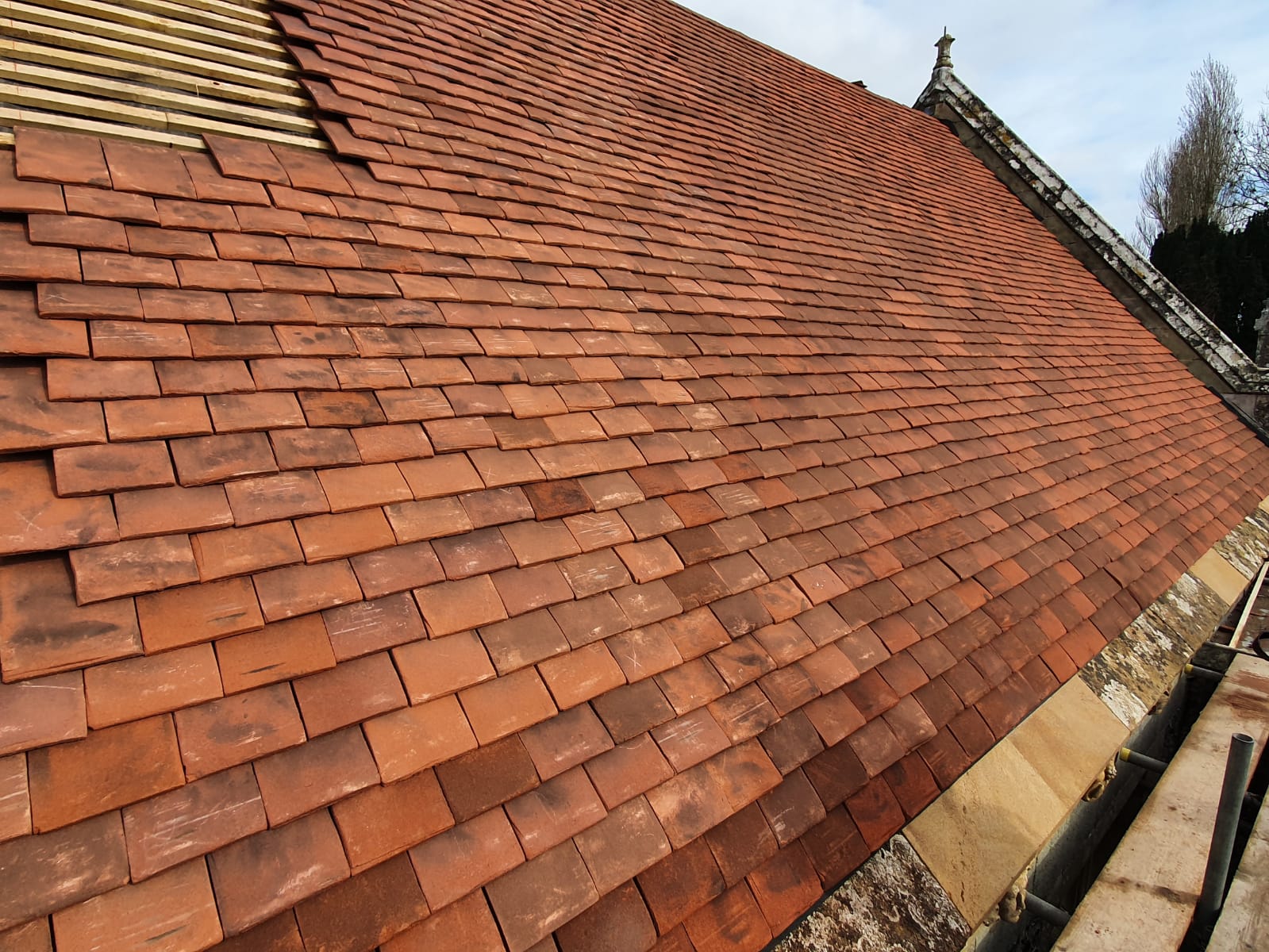
At St Mary’s Church in Long Crichel, Dorset, for example, the church roofs were completely replaced with handmade clay tiles in a mix selected to recreate the characteristic red tones of the previous roof. The wider project also involved stone repairs and working with a stained-glass specialist to conserve the church windows.
When might a church need reroofing?
Church reroofing may be necessary when deterioration is too extensive for localised repairs or when existing roofing materials and fixings have reached the end of their usable life. At St James Church, only 15% of the original stone slate could be salvaged, so 85% of the roof covering had to be replaced.
At St John the Baptist Church in Foxham, the work was carried out in phases over more than 14 years, eventually resulting in the complete reroofing of the church. This included Cotswold stone slate roofs and the oak-shake-covered tower.