
Home » Roofing Services » Clay Plain Tiling
TRADITIONAL ROOFING - SINCE 1990
Clay Plain Tile Roofing
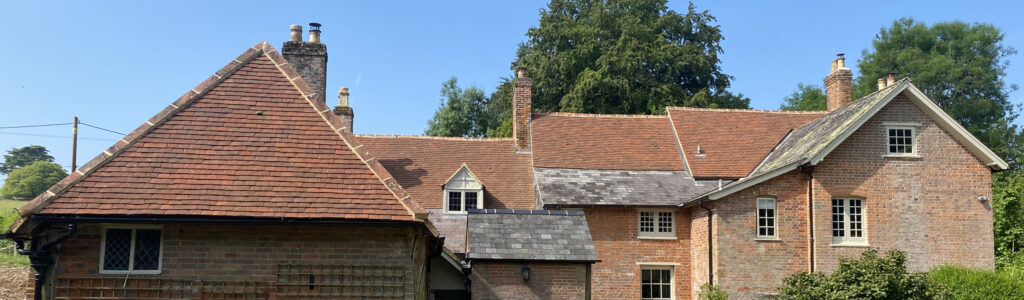
West Country Tiling specialises in plain tiling for traditional, heritage and historic roofs, working with both handmade and machine-made clay plain tiles.
or call us on 01373 462 224
Working with clay tiles since 1990
Repairs, restoration & reroofing
Traditional & heritage buildings
Our team has worked with clay plain tile roofing since 1990, carrying out repairs, restoration and complete reroofing on private homes, manor houses, churches and listed buildings. From straightforward roof slopes to complex curved details and ornamental patterns, the way plain tiles are selected and laid can make a significant difference to both the appearance and performance of the finished roof.
THE MATERIALS
What is Plain Tiling?
Plain tiles are relatively small individual roof tiles traditionally laid using a double-lap system. Unlike larger single-lap tiles, which generally interlock at the sides, plain tiles overlap the tiles in the courses below to create a weather-resistant roof covering.
Clay is one of the materials traditionally used for plain tile roofing. Clay plain tiles can be handmade or machine-made and are available in different colours, textures and finishes, making them suitable for a wide range of architectural styles.
Traditional plain tiling is particularly associated with period and historic buildings, although clay plain tiles can also be used on newer properties where their appearance suits the design of the building.
REPAIR & RESTORE
Repairing & Reroofing Clay Plain Tile Roofs
Not every clay plain tile roof needs to be completely replaced. Before work begins, the condition of the existing roof and its tiles should be assessed to establish what can be retained and what needs replacing.
Where existing clay roof tiles remain suitable for reuse, they can be carefully removed, sorted and incorporated back into the roof. New tiles can then be introduced where required.
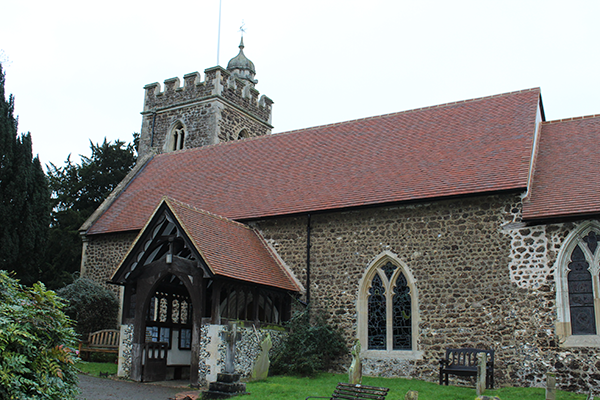
At the Grade II* listed All Saints’ Church in Binfield, Berkshire, our experienced team of master roofers stripped and retiled the Lady Chapel, North Chapel and Chancel roof slopes. New clay plain tiles were used across much of the work, while the best of the salvaged tiles were reused on the north slope of the North Chapel.
CRAFT IN THE DETAILS
Traditional Plain Tiling and Ornamental Details
One of the advantages of plain tiles is the flexibility they offer when working with detailed roof forms. Different tile shapes and careful setting out can be used to create decorative patterns, curved details and other architectural features.
This can require considerable craftsmanship on complex historic roofs.
During the reroofing of a Somerset manor house, West Country Tiling recreated ornamental banding across the front elevations using specially shaped clay plain tiles. The existing pattern was carefully reviewed so that inaccuracies introduced during previous reroofing work could be corrected.
The same property includes turrets with curved eyebrow details. As the roof tapers towards each turret, individual plain tiles have to be shaped and cut twice to achieve the required fit and maintain the curves of the roof.
These details demonstrate why traditional plain tiling involves more than simply choosing the right tile. Setting out, spacing, cutting and laying all contribute to the finished appearance of the roof.
HERITAGE ROOFING
Clay Plain Tiles for Historic and Traditional Buildings
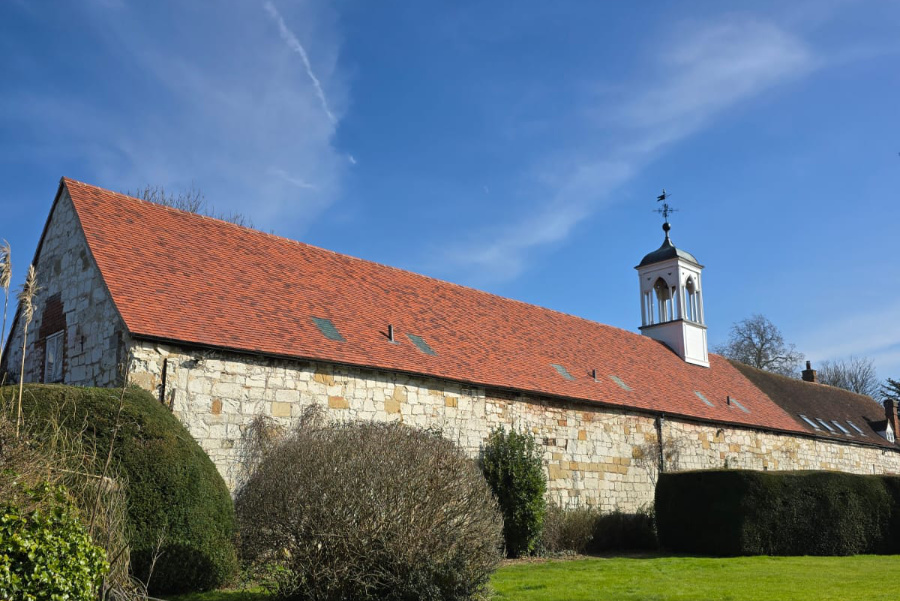
Clay plain tiles are found on many different types and ages of building. West Country Tiling has used them on projects ranging from private homes and manor houses to listed buildings and historic churches.
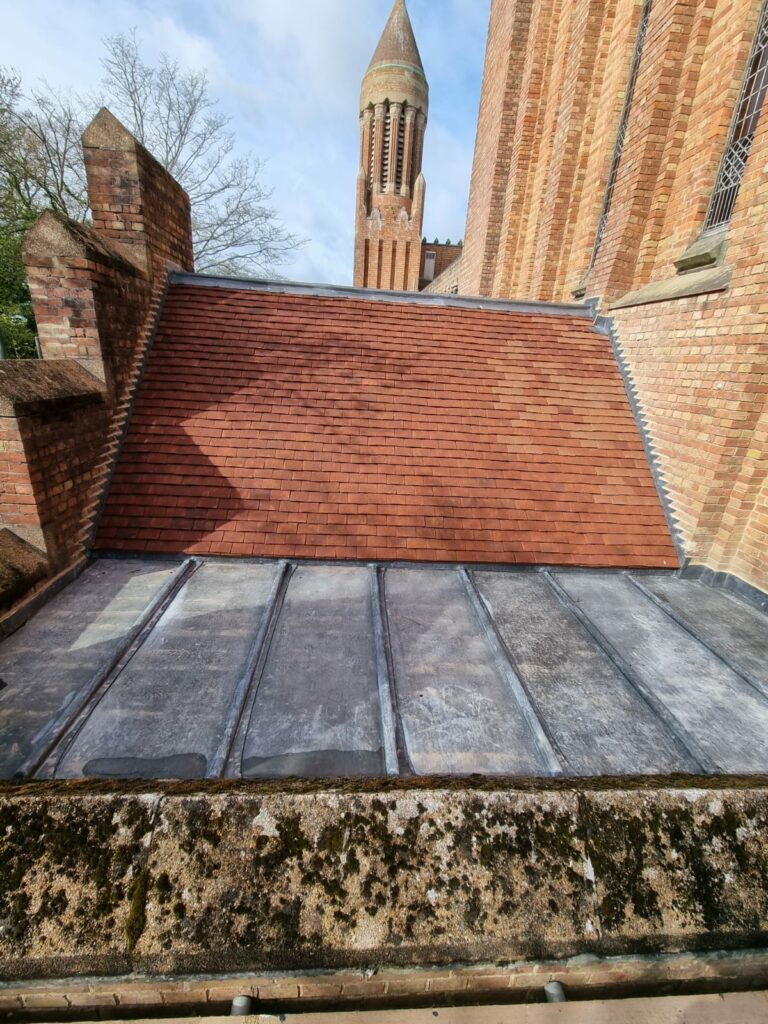
At Quarr Abbey on the Isle of Wight, for example, WCT’s restoration work included stripping the existing roof tiles and reroofing the South Choir and North and South Chapels using plain clay tiles. The wider project also involved renewing leadwork and refurbishing cast-iron rainwater goods.
Choosing tiles for an older building involves considering more than colour alone. Size, profile, texture and finish can all influence how well new tiles sit alongside the building’s existing materials and architectural character.
EXPERIENCE THAT MATTERS
Why Choose West Country Tiling?
West Country Tiling has worked with clay plain tiles and traditional roofing techniques since 1990.
Our experience ranges from plain tile roof repairs and complete reroofing to detailed heritage work involving salvaged tiles, handmade materials, ornamental banding and individually shaped tiles.
We work with homeowners, architects and other professionals on roofing projects across the South West and further afield, with experience spanning private homes, manor houses, churches and listed buildings.
Are you planning repairs, restoration or complete reroofing of a plain tile roof?
Talk to West Country Tiling about your project. We can discuss the condition of the existing roof, the type of clay plain tiles involved and whether existing materials may be suitable for reuse as part of the work.
Or call 01373 462 224
YOUR QUESTIONS ANSWERED
Clay Plain Tiling FAQs
What is the difference between plain tiles and interlocking tiles?
Plain tiles are individual tiles traditionally laid using a double-lap system, with each course overlapping the courses below. Interlocking tiles have side interlocks and are generally laid as a single-lap covering.
This difference affects the appearance of the roof as well as the way the tiles are laid.
What is a clay plain tile?
A clay plain tile is a relatively small roof tile made from fired clay. Clay plain tiles may be handmade or machine-made and are traditionally laid as a double-lap roof covering.
They are commonly associated with traditional and historic buildings but can also be used on newer properties.
Can old clay roof tiles be reused?
Yes, where their condition allows. Existing clay roof tiles can be carefully removed and assessed to identify those suitable for reuse.
On some restoration projects, salvaged tiles can be incorporated alongside new tiles, helping to retain suitable original roofing materials.
Can plain tiles be used on curved roofs?
Plain tiles can be used to create complex curved roof details, although the work may require individual tiles to be cut and shaped to fit.
On WCT’s Somerset manor house project, for example, each plain tile around the curved turret details has to be individually shaped and cut twice to follow the taper of the roof.
Are clay plain tiles suitable for listed buildings?
Clay plain tiles are found on many listed and historic buildings, but the appropriate roofing material depends on the individual property and its existing roof.
Where a listed building already has clay plain tiles, repair or reroofing may involve retaining suitable original tiles and selecting replacement materials that are appropriate to the building.
DISCOVER MORE
Find Out About Our Other Services
Here at West Country Tiling our full list of services includes: