
A leaking roof is worrying in any home, but for owners of period and listed properties, there are additional considerations. Traditional roofing materials and historic construction methods need particular care, and the wrong repairs can cause further damage.
If you’ve discovered a leak in your period or listed property’s roof, acting quickly can help prevent further damage to its original features. Here’s what to look out for, what to do next and when to call in a specialist.
What to Do if Your Heritage Roof is Leaking
If water is entering your home during heavy rain or after a storm, take these steps to limit the damage:
- Contain the water – Place buckets or towels beneath the leak and move furniture and valuables away from affected areas.
- Check for electrical hazards – Keep clear of water near electrical fittings or wiring and seek professional help if necessary.
- Avoid climbing onto the roof – Wet slates and tiles are slippery, and walking on an older roof can damage fragile materials.
- Record the damage – Take photographs of visible leaks, damp patches and affected areas. These may be useful for a roofing assessment or insurance claim.
- Contact a heritage roofing specialist – Arrange an assessment to identify where water is entering and what repairs are required.
Avoid attempting temporary roof repairs yourself. Applying sealants or other unsuitable materials can make the problem worse and may damage historic roofing materials.
Warning Signs of a Leaking Roof in a Period Property
Not all roof leaks result in water dripping through the ceiling. Moisture can travel through roof structures before becoming visible inside the property. Common warning signs include:
- Damp patches or water stains on ceilings and walls.
- Peeling paint, flaking plaster or discoloured decoration.
- Musty smells or persistent dampness in loft spaces.
- Water marks on roof timbers.
- Missing, cracked or slipped slates and tiles.
- Dripping or increased dampness following heavy rainfall.
These signs should not be ignored. Even a relatively small leak can lead to deterioration of roof timbers, plasterwork and historic interior features if left unresolved.
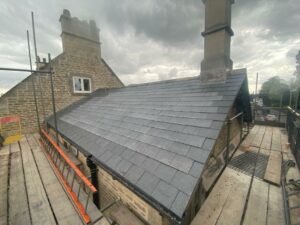
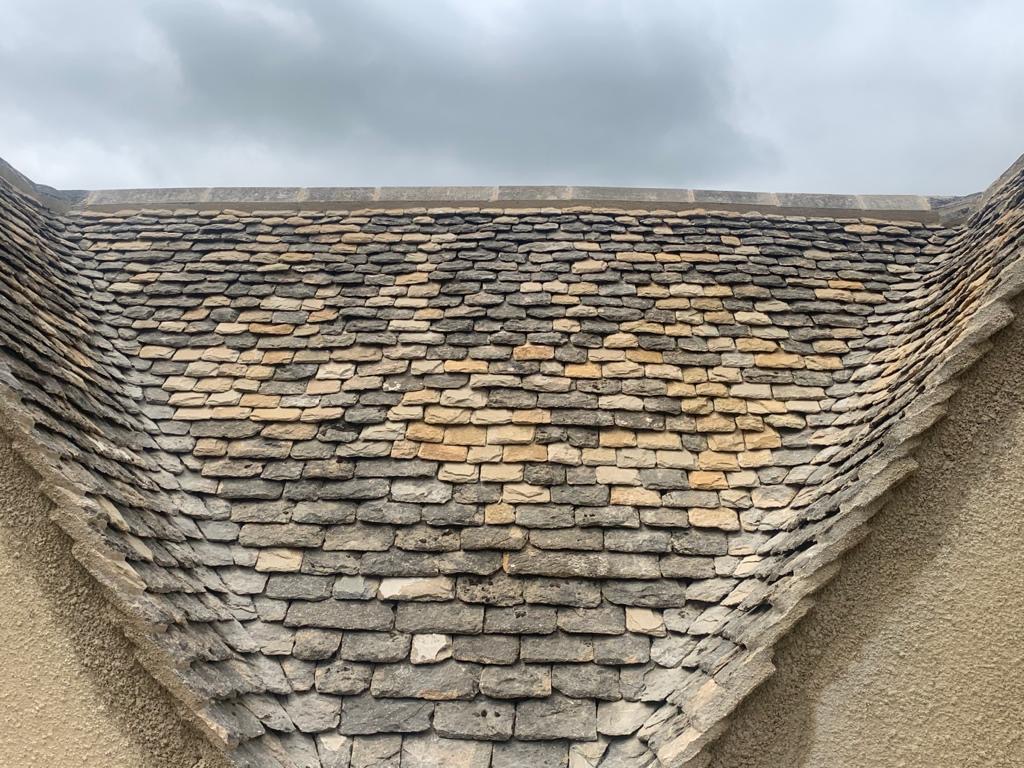
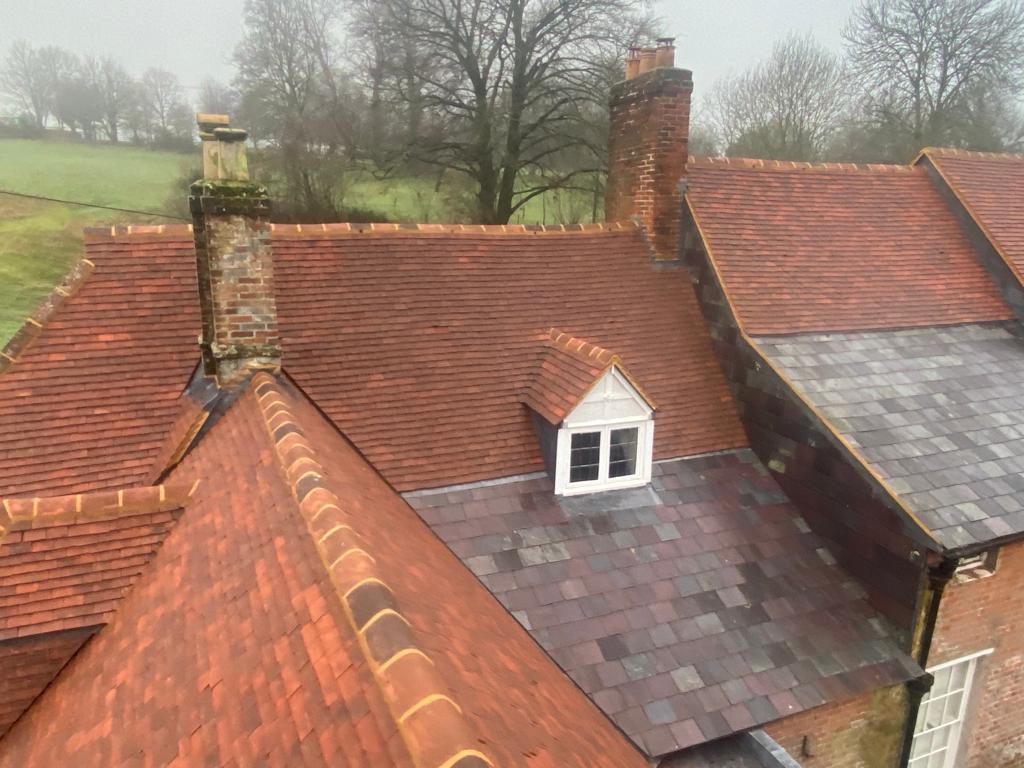
What Causes Roof Leaks in Heritage Properties?
Historic roofs can develop leaks for several reasons, often related to the age and condition of their materials.
Damaged or Slipped Slates and Tiles
Natural slate, stone slate and traditional clay tiles can become damaged or displaced through weathering, storms or the deterioration of their fixings. This can create gaps where rainwater enters.
Deteriorating Leadwork
Lead flashings around chimneys, roof junctions and other details help prevent water entering vulnerable areas. Ageing or damaged leadwork can allow moisture to penetrate the roof.
Failing Mortar and Roof Details
Deteriorating mortar around ridges, hips and chimneys can expose parts of the roof to water ingress. Repairs need to take account of the original construction and materials.
Blocked Gutters and Drainage
Leaves, moss and other debris can obstruct gutters and downpipes, causing water to overflow or collect where it should drain away.
Previous Inappropriate Repairs
Modern materials or unsuitable repair methods may not work well with traditional roof construction. Poorly executed repairs can also conceal underlying problems rather than resolve them.
Identifying the cause is important because the point where water appears inside a property may be some distance from where it enters the roof.
Why Historic Roofs Need Specialist Repairs
Unlike many modern roofs, historic roofing systems often rely on traditional materials and construction techniques that have been used for generations.
Stone slates, natural slates, handmade clay tiles, lime mortar and leadwork all have particular characteristics. Repairs need to consider how these materials interact and how the original roof was constructed.
For example, replacing traditional mortar with an unsuitable modern alternative or using sealants to cover a leaking junction may create additional problems. Unsuitable materials can trap moisture, damage original roofing materials or make future repairs more difficult.
Where possible, sound original materials should be retained and reused, with replacement materials selected to suit the existing roof.
For listed buildings, certain repairs or alterations may also require listed building consent. The need for permission depends on the nature of the work and its effect on the building’s special architectural or historic interest.
An experienced heritage roofing contractor can assess the roof and recommend an approach that addresses the leak while respecting the building’s character.
When Should You Arrange a Specialist Roof Assessment?
If you’ve noticed water entering your property, persistent dampness or visible damage to roof coverings, arrange a professional assessment rather than waiting for the problem to worsen. This is particularly important if leaks keep returning, historic interior features are being affected or previous repairs haven’t resolved the problem.
A specialist can identify the cause and establish whether localised repairs are sufficient or more extensive work is needed.
For further information about caring for traditional roofs, explore West Country Tiling’s Heritage Roofing and Listed Building Roofing services.
Heritage Roof Leak Repairs from West Country Tiling
Established in Frome in 1969, West Country Tiling has extensive experience working on traditional and historic roofs across the South West. Toby Pitt has led the family business since 1990.
Our team has experience repairing and restoring roofs on period homes, listed buildings and other historically significant properties, working with natural slate, stone slate, traditional clay tiles and specialist leadwork.
We understand the importance of identifying the cause of a leak before recommending repairs, particularly where original roofing materials and historic features need to be protected.
Whether your roof requires replacement slates, repairs to leadwork or a more detailed assessment, our approach considers both the immediate problem and the long-term condition of the roof.