
Preserving One of England’s Most Historic Buildings Through Traditional Craftsmanship
Nestled on the banks of the River Thames in Berkshire, Bisham Abbey has stood at the heart of English history for more than 800 years. Originally founded as a priory in the 13th century, the Grade I listed building has welcomed royalty, witnessed significant moments in British history and remains one of the country’s most important historic landmarks.
West Country Tiling has been proud to play a role in the Abbey’s ongoing conservation, helping to preserve its historic fabric through traditional roofing and restoration techniques. In previous updates, we’ve shared the extensive clay plain tile roofing works completed across the estate and highlighted the importance of using handcrafted materials that complement the original architecture.
As the project continues, our work has expanded well beyond the roof itself. Conservation on a building of this significance involves a wide range of specialist skills, with every repair contributing to the long-term preservation of the Abbey and its surrounding historic structures.
Traditional Conservation in Practice
Historic buildings rarely require just one type of repair. Successful conservation depends on understanding how traditional materials work together and carrying out sympathetic repairs that protect the building while respecting its original character.
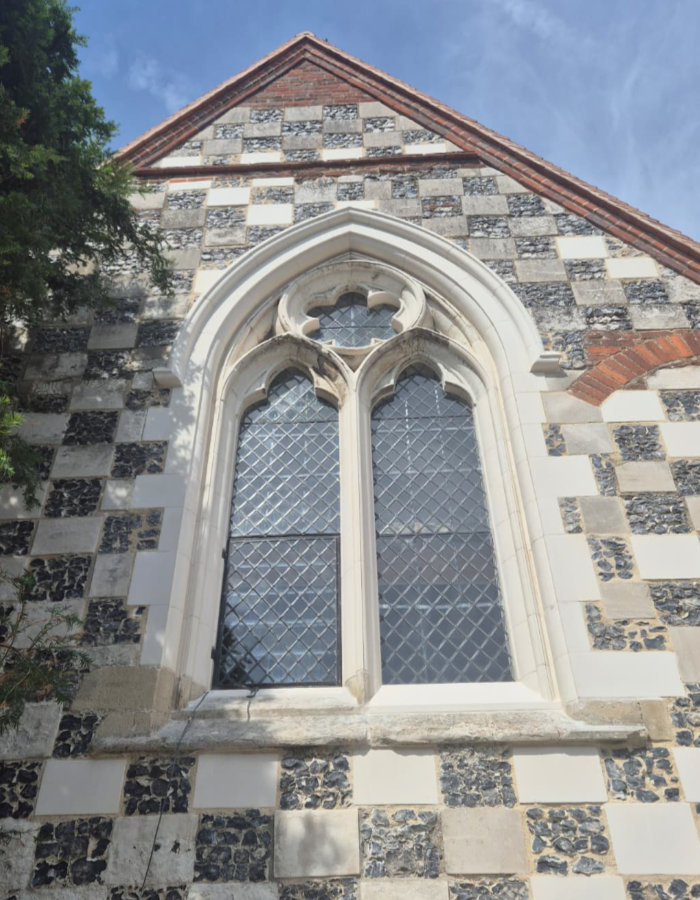
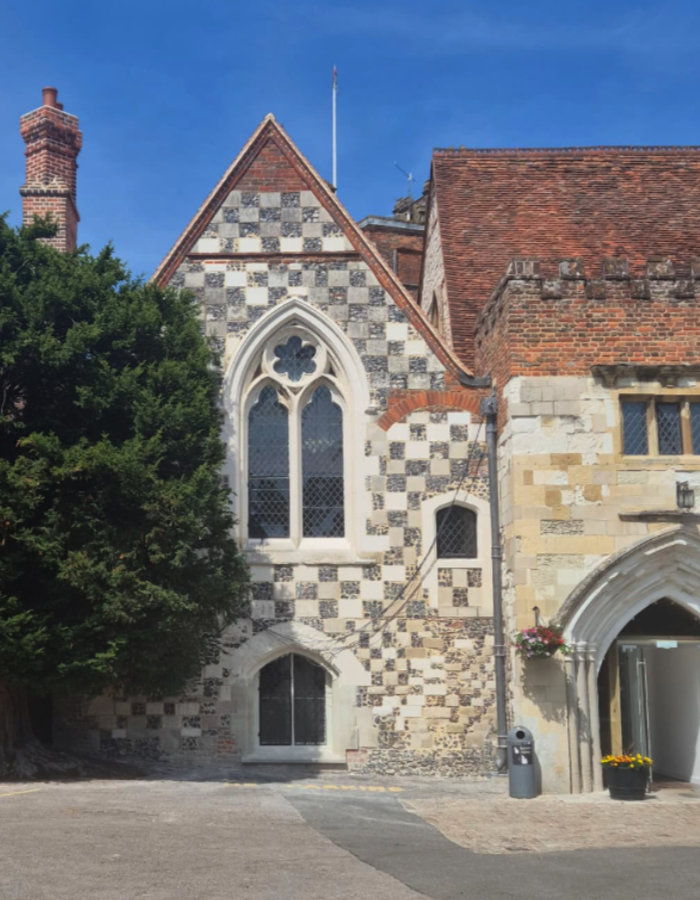
Conserving Historic Windows and Stonework
Historic windows are among the defining features of Bisham Abbey, but preserving them involves far more than repairing the glazing itself.
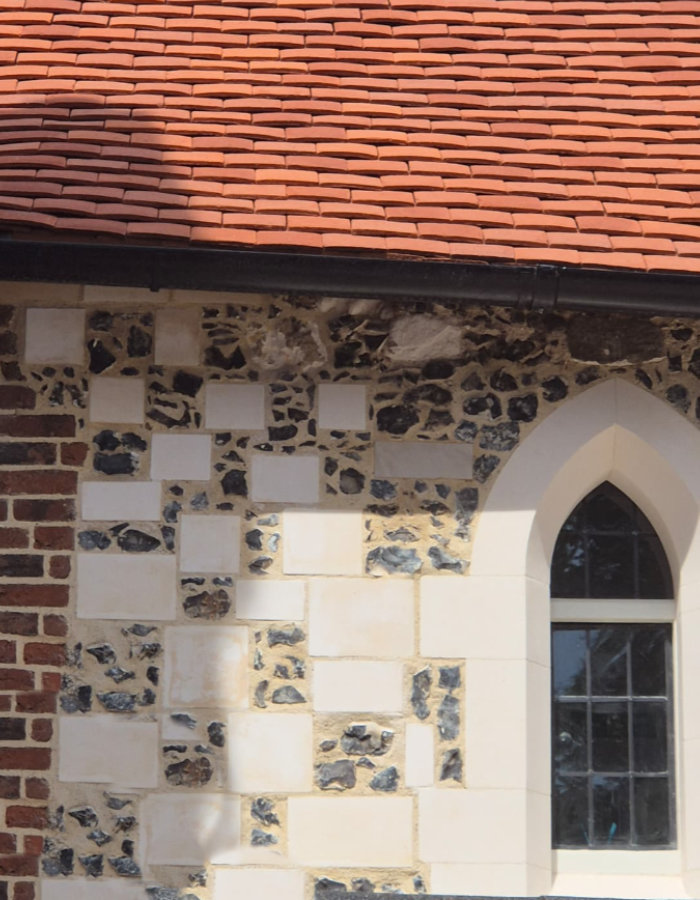
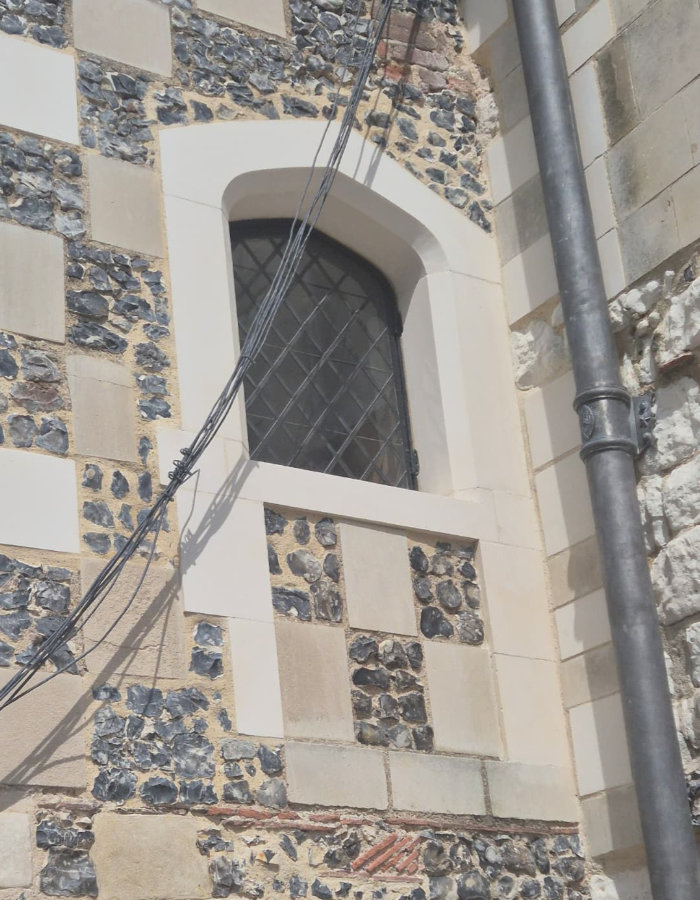
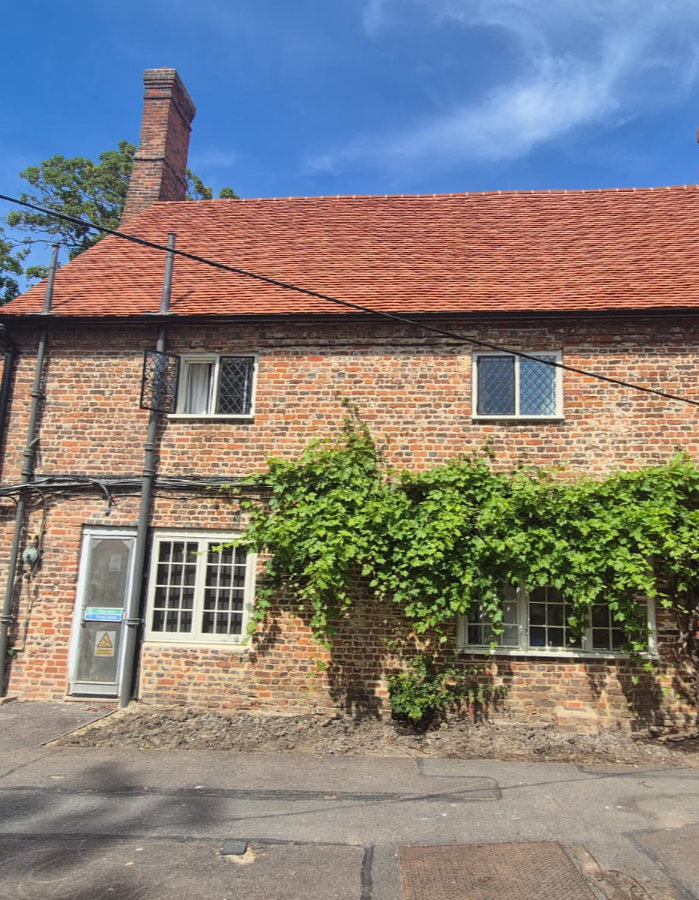
As part of the ongoing conservation programme, West Country Tiling has undertaken specialist work to restore the historic window openings, carefully repairing damaged stone surrounds and intricate Gothic tracery while preserving the character of the original architecture. The leaded glazing has been sympathetically reinstated, allowing the repaired windows to sit naturally within the surrounding flint and stone masonry.
Rather than replacing original features unnecessarily, every repair has been approached with the aim of retaining as much historic fabric as possible while ensuring the windows continue to protect the building for many years to come.
Traditional Lime Rendering and Slate Roofing
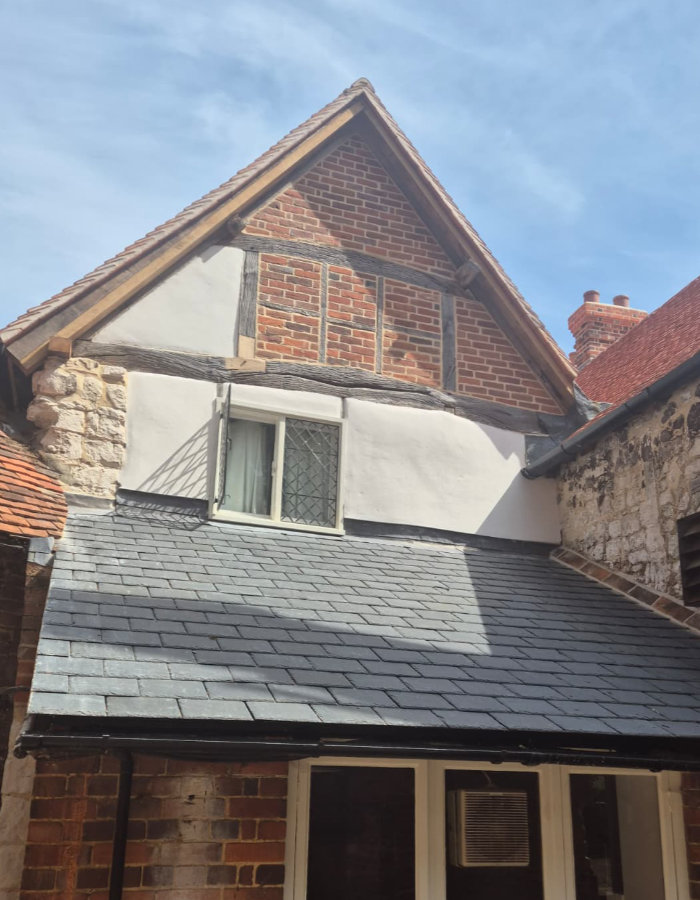
The conservation programme also extends to traditional lime rendering and natural slate roofing across other areas of the estate.
Unlike modern cement-based products, lime render allows historic walls to breathe, helping moisture escape naturally and reducing the risk of trapped damp causing long-term damage. Using compatible materials is essential when working on listed buildings, ensuring repairs protect both the structure and its historic significance.
Alongside the lime rendering works, repairs have also been completed to the natural slate roof. Wherever possible, existing materials have been retained and carefully repaired, with replacement slates selected to match the original roof as closely as possible. This sympathetic approach preserves the appearance of the building while providing the weather protection expected of a modern conservation project.
Traditional Leadwork and Wiped Lead Joints
Lead has played an important role in British construction for centuries, valued for its durability, flexibility and exceptional lifespan.
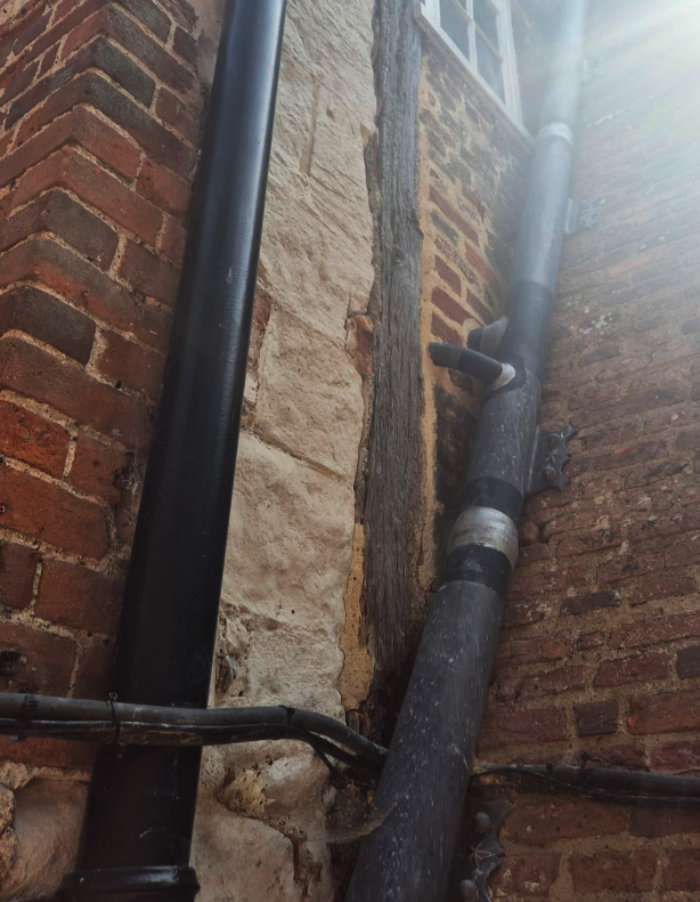
At Bisham Abbey, West Country Tiling has carried out specialist leadwork, including the installation of lead soil vent pipes complete with traditional wiped lead joints. Although modern alternatives are available, heritage buildings often demand traditional methods that preserve both their appearance and authenticity.
These highly skilled techniques produce durable, watertight joints while remaining faithful to the craftsmanship originally found throughout historic buildings such as Bisham Abbey.
Conserving Dormer Windows, Chimneys and Clay Plain Tile Roofs
Conservation work has also included repairs to traditional dormer windows, historic chimney stacks and the Abbey’s clay plain tiled roofs.
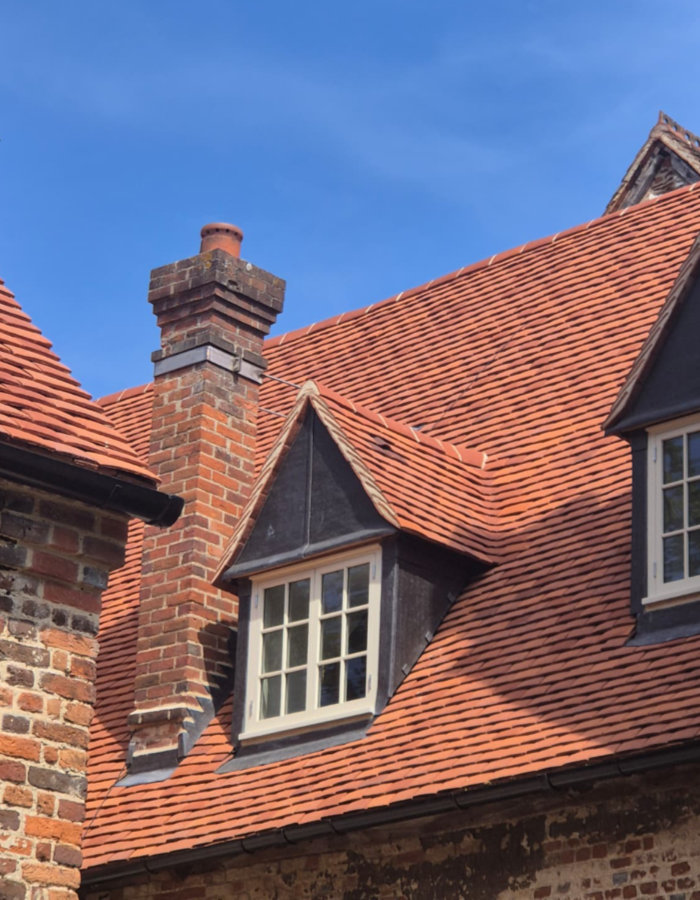
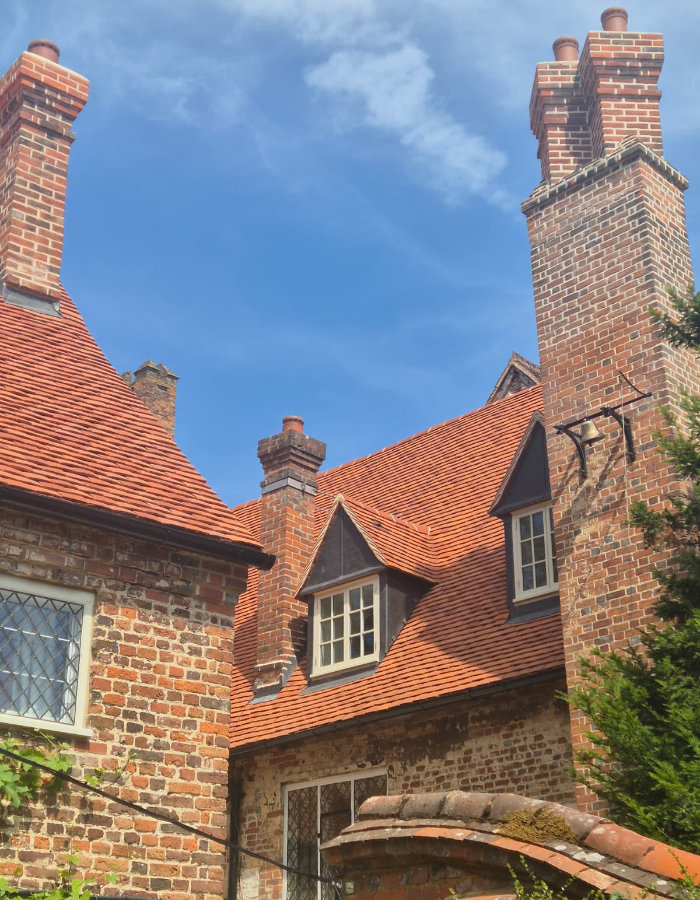
The dormer windows have been carefully repaired and integrated into the surrounding roofscape, preserving their traditional detailing while ensuring a reliable, weatherproof finish. Around them, further sections of handcrafted clay plain tiles continue the roofing work featured in our previous updates, blending seamlessly with the Abbey’s historic roofline.
To help safeguard one of the historic chimney stacks, a discreet chimney stay has also been installed. Although largely hidden from view, stabilisation measures such as these play an important role in protecting historic masonry while avoiding more intrusive structural intervention in the future.
Together, these repairs demonstrate that successful conservation is rarely about replacing individual components. It’s about understanding how every element of a historic roof works together and carrying out carefully considered repairs that protect the building for generations to come.
Conserving the Grade I Listed Dovecote
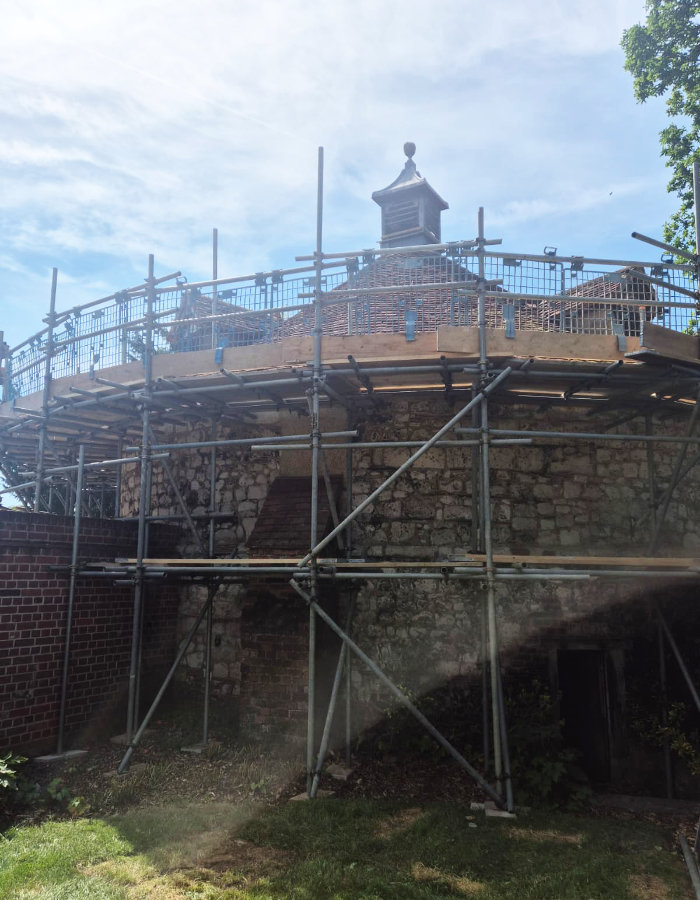
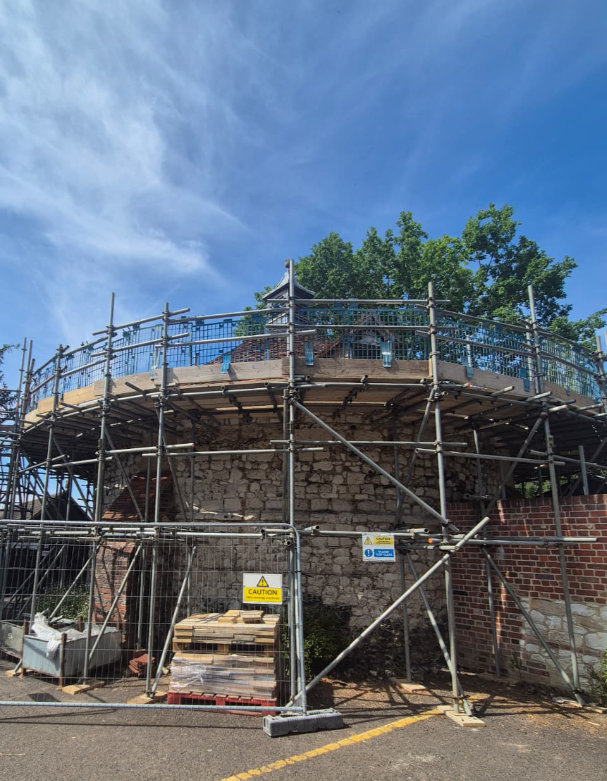
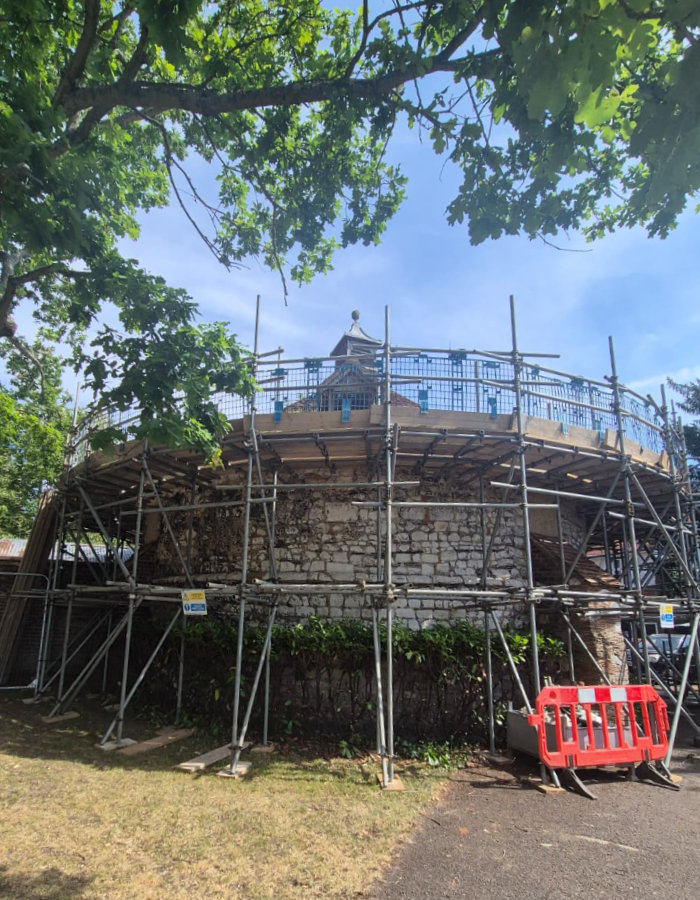
One of the most distinctive parts of the ongoing project is the conservation of Bisham Abbey’s Grade I listed dovecote.
Circular dovecotes are an increasingly rare feature of England’s historic estates and require specialist knowledge to repair sympathetically. Extensive access scaffolding has been erected to allow detailed inspection and conservation work to be carried out safely while protecting the historic structure.
Although smaller than the Abbey itself, the dovecote forms an important part of the estate’s history. Preserving buildings like these helps protect not only the architecture, but also the stories and craftsmanship that have shaped the site for centuries.
Traditional Conservation Skills for Heritage Projects
Bisham Abbey is just one example of the specialist conservation work undertaken by West Country Tiling. Alongside traditional roofing, our team provides a wide range of heritage building services designed to support the restoration and long-term preservation of listed buildings, period properties and historic estates.
Our expertise extends beyond clay plain tiling and slate roofing to include traditional leadwork, lime rendering, stone and masonry repairs, chimney repairs and stabilisation, dormer window restoration, timber repairs and a variety of other specialist conservation techniques. By offering these complementary services, we can provide a more complete approach to heritage projects, helping property owners, architects and conservation professionals work with a contractor who understands how traditional buildings are constructed and maintained.
Every historic building presents its own challenges, which is why we take the time to understand the structure, recommend sympathetic repair methods and use traditional materials wherever appropriate. Whether we’re restoring a medieval abbey, repairing a listed farmhouse or conserving an important architectural feature, our focus remains the same: protecting the building’s history while ensuring it can continue to be enjoyed for generations to come.
Preserving More Than Buildings
Conservation is about far more than repairing roofs or replacing individual materials. It requires an understanding of traditional building techniques, an appreciation of historic craftsmanship and a commitment to preserving the unique character of every structure.
At Bisham Abbey, every stage of the project reflects these principles. From restoring Gothic window surrounds and repairing lime render to specialist leadwork, chimney stabilisation and the conservation of the Grade I listed dovecote, each task contributes to the long-term preservation of one of England’s most remarkable historic buildings.
As work continues, we look forward to sharing further updates from Bisham Abbey and showcasing the traditional skills that help protect Britain’s architectural heritage for future generations. To get in touch with our team, please call 01373 462 224 or email info@westcountrytiling.com to find out how we can help.